Best Cider Press UK: Basket, Rack-and-Cloth and Hydropress Compared
A UK guide to cider presses — basket, rack-and-cloth and hydropress designs, why you need a scratter first, and what yield to expect.
Best Cider Press UK: Basket, Rack-and-Cloth and Hydropress Compared
The press is the piece of equipment that decides whether making cider from your own apples is a pleasant autumn weekend or a miserable one. Buy too small and you will still be pressing at midnight; buy the wrong type and you will get half the juice you expected. This guide is based on desk research: manufacturer specifications, UK retailer listings and owner reviews rather than first-hand testing. Below you will find the three press designs, the tool most first-timers forget, realistic yields, and a comparison of typical options.
Quick Picks
| Best for | Type | Why we picked it |
|---|---|---|
| Best for small batches | Basket press, around 12–20 litres | Simple, cheap, no consumables, handles a few trees’ worth. |
| Best for volume | Hydropress | Fastest cycle by a distance, driven straight off a hose. |
| Best yield | Rack-and-cloth | Traditional layered cheeses give the highest extraction. |
First: You Need a Scratter, Not Just a Press
This is the single most common first-year mistake. A press will not crush whole apples. Put whole fruit in a press and it will squirt, jam and give you almost nothing. Apples have to be pulped first — milled into a coarse mash — and the machine that does it is a scratter (also called a mill or crusher).
Options run from a hand-cranked scratter with a toothed roller, through electric mills, down to improvised approaches with a sanitised bucket and a length of timber, which works for very small quantities and is exhausting beyond that. Many UK suppliers sell scratter-and-press combinations, and if you are buying from scratch that is usually the sensible purchase.
Budget for the scratter as part of the cost. A press on its own is half a kit.
The Three Designs
Basket press (traditional screw press). A slatted wooden or steel basket, a pressing plate and a central threaded screw you turn down by hand, often with a ratchet. Pulp goes in loose, juice runs out between the slats.
Simple, robust, nothing to consume, and there is very little to go wrong. The limitations are speed and yield: you can only fill the basket so deep before the middle of the mass stops draining, so a big basket is not proportionally faster, and extraction is lower than a layered press. Typical hobby sizes run roughly 12 to 40 litres of basket volume. This is the right first press for a few trees.
Rack-and-cloth press. Pulp is wrapped in cloths to form flat “cheeses”, stacked with wooden racks between them, and the whole stack is pressed. Because each layer is thin, juice has a short path out, and extraction is the best of the three.
The trade-off is labour and cleaning — building and unwrapping cheeses is fiddly, and the cloths need washing every time. This is the traditional commercial design scaled down, and it is what to buy if maximum yield from limited fruit is the point.
Hydropress (water press). A cylindrical cage with an inflatable rubber bladder up the middle. You connect a garden hose, mains water inflates the bladder, and it squeezes the pulp outwards against the cage wall.
The advantage is that it presses gently and continuously without anyone cranking, so the cycle is fast and largely unattended, and yields are good. Speidel’s hydropresses are the ones most often seen in the UK. The downsides are that you need mains water pressure at the pressing site, the bladder is a wearing part, and the units cost more than an equivalent basket press.
Comparison Table
| Type | Typical capacity | Yield | Effort | Approx price |
|---|---|---|---|---|
| Basket press, small | around 12 litres | Moderate | High | around £100–£200 |
| Basket press, larger | around 20–40 litres | Moderate | High | around £200–£450 |
| Rack-and-cloth | Varies with stack | Highest | Very high | around £400–£1,200 |
| Hydropress | around 20–90 litres | High | Low | around £350–£900 |
| Scratter / mill | — | — | — | around £80–£400 |
Prices are indicative and were correct at the time of writing, and this equipment is strongly seasonal — availability and price both move sharply in September and October. Vigo is the best-known UK supplier of cider-making equipment and a useful reference point for what a fair price looks like.
What Yield to Expect
A useful planning figure for well-milled, ripe apples is roughly 60–70% of the fruit weight as juice, so 10kg of apples gives somewhere around 6–7 litres. A basket press at the lower end of that range and a rack-and-cloth or hydropress at the upper end is a reasonable expectation.
Two things move the number more than the press does:
- Milling quality. Coarse, uneven pulp presses badly whatever machine you own. A good scratter is worth more yield than an upgraded press.
- Fruit condition. Apples that have been sweated — left in a heap for a week or two after picking to soften slightly — press noticeably better than fruit straight off the tree.
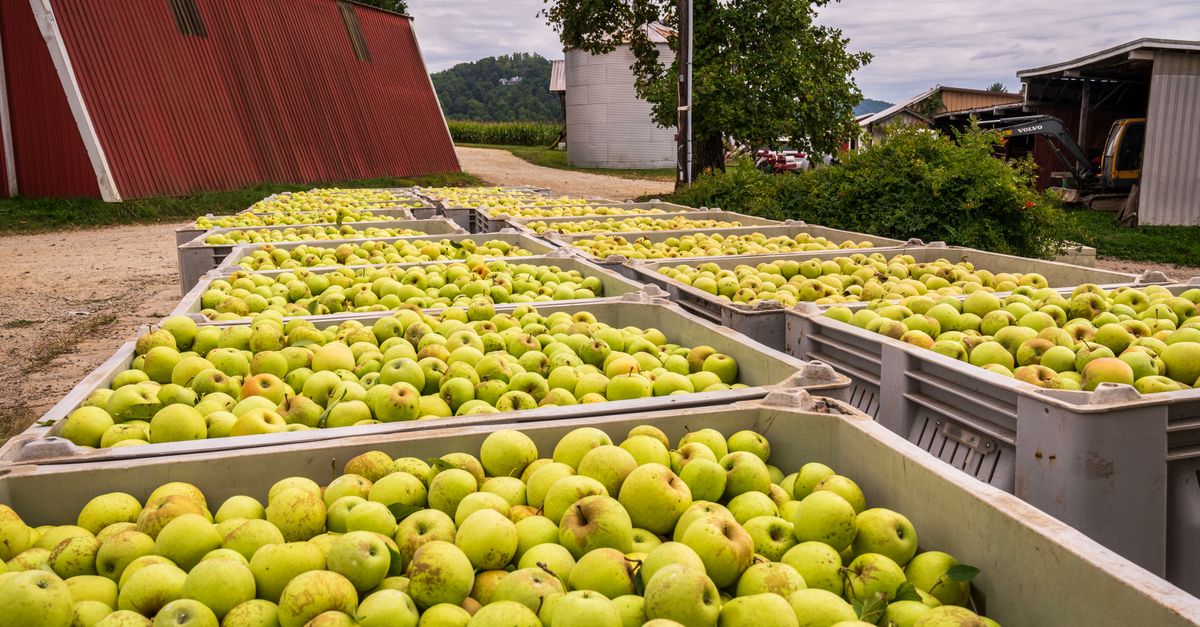
Working backwards from a target: a 25-litre demijohn batch needs roughly 35–40kg of apples, which is a lot more fruit than most people estimate from looking at a tree.
Practical Notes
Buy bigger than you think. The commonest regret in owner reviews is a press that turned out too small once the fruit was actually in front of them. Pressing is a seasonal, all-at-once job.
Food-grade contact surfaces. Older second-hand presses may have painted or galvanised parts that should not touch juice. Stainless, food-grade plastic and untreated hardwood are fine.
Cleaning is the real work. Pulp dries like concrete. Hose everything down immediately after use, before it sets.
Wooden presses need care. Untreated hardwood baskets should be wetted before first use to swell the slats, and stored dry.
Second-hand is a good market. Presses barely wear out. A decent used basket press is often half the price of new, and the seasonal pattern means autumn is the worst time to buy — look in spring.
FAQ
Do I need a scratter as well as a cider press? Yes. A press cannot crush whole apples — the fruit has to be milled into a coarse pulp first, and whole apples in a press simply jam and squirt out. Many UK suppliers sell scratter-and-press packages, which is usually the better buy if you are starting from nothing. For very small quantities you can improvise with a sanitised bucket and a timber pole, but it is hard work.
How many apples do I need for a gallon of cider? Roughly 60–70% of the apple weight comes out as juice with a decent press, so a 4.5 litre gallon needs somewhere around 7kg of fruit and a 25 litre batch needs roughly 35–40kg. Most people substantially underestimate this — a mature tree in a good year helps, but one tree rarely fills a 25 litre fermenter.
Which cider press gives the best yield? Rack-and-cloth, because the pulp is pressed in thin layers so juice has a short path out. A hydropress comes close with far less labour, and a basket press extracts the least because the centre of a deep basket stops draining. That said, milling quality and letting the apples sweat for a week or two after picking affect yield more than the press design does.
Is a hydropress worth the extra money? If you are pressing more than a few hundred kilos, usually yes — it runs off mains water pressure with almost no manual effort, the cycle is fast and yields are high. For a couple of trees and a weekend, a basket press does the job for a third of the price. The hydropress also needs a hose connection wherever you are pressing, which rules it out for some sites.