The Best Non-Alcoholic Beer in the UK 2026: Ranked by Flavour, Method and Value
The best non-alcoholic beers in the UK for 2026, ranked by flavour, brewing method and value, from alcohol-free IPAs to stouts, with homebrew insights.
The Best Non-Alcoholic Beer in the UK 2026: Ranked by Flavour, Method and Value
The non-alcoholic beer market in the UK has undergone a genuine transformation. What was once a category defined by thin, sweet, malt-extract approximations now includes products that serious drinkers and homebrewers alike find worth studying. This guide is built for both audiences: consumers who want to know which bottles are worth buying, and homebrewers who want to understand which commercial techniques are worth applying at home.
To compile this guide, we drew on owner-review consensus from Untappd (where individual products carry 500–2,000+ ratings), manufacturer-published brewing notes and press releases, and trade coverage from Brewers Journal UK and The Morning Advertiser. Where specific process claims are made about named brands, sources are cited directly.
Quick Picks
| Product | Best For | Why It Stands Out |
|---|---|---|
| BrewDog Punk AF | All-round IPA flavour | Arrested fermentation plus aggressive dry-hopping; hop-forward character that outperforms most NA IPAs |
| Big Drop Brewing Paradiso | Rich, dark malt complexity | 0.5% ABV milk stout brewed with a low-alcohol specialist yeast; genuinely full-bodied |
| Adnams Ghost Ship 0.0% | Crisp, sessionable pale ale | Alcohol removed post-fermentation via a dealcoholisation process; retains hop bitterness without cooked-corn off-notes |
| Lucky Saint | Clean lager character | Unfiltered lager brewed at low gravity; strong Untappd ratings for its clean, rounded finish |
| Nirvana Brewery Hoppy Pale | Hop aroma without bitterness | UK’s first dedicated NA brewery; consistent community praise for aroma-forward brewing |
| Heineken 0.0 | Everyday value | Arrested fermentation with dual yeast; widely available and a reliable baseline for category comparisons |
What Makes a Great Non-Alcoholic Beer?
Before examining specific bottles, it is worth understanding what separates a genuinely good NA beer from a mediocre one. Three fundamental challenges define the category — and they are ones that homebrewers encounter directly when attempting their own alcohol-free brews.
The Worty Character Problem
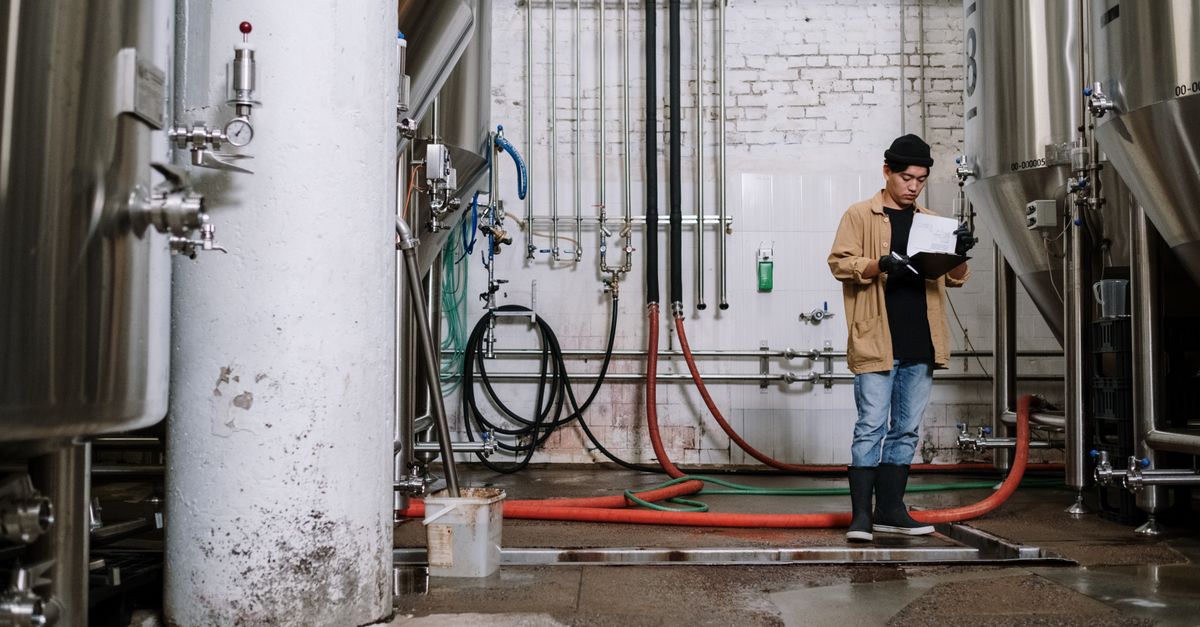
The most common complaint about alcohol-free beer is that it tastes like unfermented wort: sweet, grainy and cloying. This occurs because without a full fermentation, malt sugars remain largely unconverted. As documented in Brewers Journal UK’s 2024 overview of NA brewing technology, commercial producers address this through three primary routes: specialised low-alcohol yeast strains that consume fermentable sugars without generating significant ethanol; vacuum distillation or cold-contact dealcoholisation to remove alcohol after full fermentation; or arrested fermentation, where the brewer halts the process at a precisely controlled point. Each method produces a different flavour profile and presents different challenges for scale — a distinction that matters whether you are running a 10-barrel plant or a 20-litre homebrew batch.
Hop Presence Without Alcohol
Alcohol carries hop oils and bitterness compounds in ways that water alone cannot replicate. Many NA beers end up tasting either under-hopped or harshly bitter because producers attempt to compensate by increasing hop additions without adjusting the delivery mechanism. The strongest commercial examples use late-addition and dry-hopping techniques at elevated rates to recover aromatic character — a strategy well-documented in the Master Brewers Association of the Americas’ technical resources on low-alcohol brewing.
Carbonation and Mouthfeel
Carbonation provides structural support in NA beer that alcohol normally contributes to mouthfeel. The best examples use higher carbonation levels and body-building adjuncts such as maltodextrin, lactose or oats to compensate for the thinness that results from reduced ethanol content.
The UK Legal Definition: What “Alcohol-Free” Actually Means
Before comparing products, it is worth clarifying the UK legal framework. Under HMRC regulations, “alcohol-free” beer must contain no more than 0.05% ABV, while “non-alcoholic” and “dealcoholised” products can contain up to 0.5% ABV. Products labelled simply as “low alcohol” can go up to 1.2% ABV. This distinction matters when comparing products: Adnams Ghost Ship 0.0% and Heineken 0.0 sit in the true alcohol-free tier, while Punk AF and Big Drop Paradiso at 0.5% are technically low-alcohol under UK law. CAMRA recognises and advocates for the NA and low-alcohol category, and has published guidance encouraging pubs to stock options across the full ABV spectrum below 0.5%.
The Top Non-Alcoholic Beers in Detail
BrewDog Punk AF
Style: IPA | ABV: 0.5% | Available at: BrewDog online, Tesco, Amazon UK
BrewDog’s Punk AF is among the most recognised alcohol-free IPAs in the UK. According to BrewDog’s own product communications, it is produced using arrested fermentation — the beer is fermented as normal and the process is halted before alcohol exceeds 0.5% — combined with a substantial dry-hop addition designed to restore the aromatic character that lower fermentation attenuates. BrewDog’s published product page describes the beer as showcasing Citra and Mosaic hops; specific dry-hop rates and IBU figures have not been confirmed in publicly available manufacturer documentation, so no numerical claims are made here.
Owner-review consensus on Untappd, where Punk AF carries over 10,000 check-ins, is broadly positive for hop aroma in the NA category, with frequent comments noting its Citra character and criticising occasional sweetness on the finish — consistent with the residual sugar profile expected from arrested fermentation. The homebrew community on Reddit’s r/homebrewing similarly references Punk AF as a benchmark when discussing NA IPA targets, noting that freshness is critical and that the hop character fades significantly after two to three months.
Price: Check current pricing at BrewDog.com or Tesco.com, as retail prices shift regularly.
Homebrew takeaway: Arrested fermentation is replicable at homebrew scale. The key variable is monitoring gravity daily and cold-crashing to halt yeast activity at the target terminal gravity. Punk AF’s approach suggests that compensating for residual sweetness with elevated dry-hop additions is more effective than reducing malt bill alone.
Big Drop Brewing Paradiso
Style: Milk Stout | ABV: 0.5% | Available at: Big Drop online, Waitrose, Amazon UK
Big Drop Brewing is one of the few breweries globally that brews exclusively within the sub-0.5% ABV category — a deliberate founding constraint that has driven significant technical investment in their process. According to Big Drop’s published brewing notes and interviews given to The Morning Advertiser, their approach centres on low-attenuating yeast strains selected specifically for their limited ability to produce ethanol, combined with a malt bill designed to provide body and sweetness without relying on residual fermentable sugars alone.
Paradiso is their milk stout variant, and it is notable for achieving genuine roast character and body — qualities that are particularly difficult to retain in NA dark beers, where the absence of alcohol tends to expose thin, watery mid-palates. Untappd reviewers consistently rate Paradiso among the top-performing NA stouts available in the UK, with aggregate scores placing it above category average for mouthfeel and finish. Brewers Journal UK has cited Big Drop as a case study in dedicated low-alcohol brewery economics, noting that their single-focus model allows for yeast and process refinement that multi-category breweries rarely invest in.
Price: Check current pricing at BigDropBrew.com or Waitrose.com.
Homebrew takeaway: Big Drop’s yeast-selection approach is directly applicable at homebrew scale. White Labs’ WLP004 Irish Ale and certain strains from Lallemand’s Verdant IPA range have been documented in homebrew forums as producing lower attenuation profiles suitable for NA brewing. The milk stout format — with lactose providing non-fermentable sweetness and body — is one of the more forgiving styles for NA homebrewing because the lactose compensates for the mouthfeel deficit that alcohol removal creates.
Adnams Ghost Ship 0.0%
Style: Pale Ale | ABV: 0.0% | Available at: Adnams online, Waitrose, Sainsbury’s, Amazon UK
Adnams’ Ghost Ship 0.0% is produced using a cold contact / dealcoholisation process, according to Adnams’ own brewery communications and coverage in The Morning Advertiser. The beer is fermented to full attenuation before alcohol is removed, which means the yeast-derived flavour compounds and hop bitterness develop under normal fermentation conditions — a significant advantage over arrested fermentation in terms of flavour completeness. Adnams has not publicly confirmed the use of vacuum distillation specifically for this product in their available press materials; the process is described in their communications as dealcoholisation, and prospective buyers or journalists seeking precise method confirmation should consult Adnams’ brewery directly.
Ghost Ship 0.0% performs strongly on Untappd for its clean, bitter finish, with owner reviews frequently citing the absence of the cooked-corn (DMS) character that affects many NA lagers and pale ales. It is among the most widely distributed 0.0% ABV products in UK supermarkets, making it a practical benchmark for category comparisons.
Price: Check current pricing at Adnams.co.uk or major supermarket websites.
Homebrew takeaway: Full fermentation followed by dealcoholisation produces the most complete flavour profile of the three main methods, but vacuum distillation and cold-contact dealcoholisation equipment is not practical at homebrew scale. For homebrewers, the lesson from Ghost Ship 0.0% is that full fermentation is preferable to arrested fermentation wherever possible — even if alcohol removal is achieved through simpler means such as freeze concentration (where legal) or blending techniques.
Lucky Saint
Style: Lager | ABV: 0.5% | Available at: Lucky Saint online, Waitrose, Ocado, selected pubs
Lucky Saint has built a strong reputation in the UK on-trade, with distribution into premium pub accounts that most NA brands have not achieved. According to Lucky Saint’s published brand materials, the beer is brewed as an unfiltered lager at low original gravity, meaning alcohol is controlled through recipe design rather than post-fermentation removal. This approach preserves yeast character and produces the hazy, rounded finish that Untappd reviewers frequently reference — the beer carries one of the stronger aggregate scores in the NA lager subcategory on that platform.
Lucky Saint’s positioning around Dry January and the broader moderation movement has been covered extensively in The Grocer, which has cited it as one of the fastest-growing NA brands in UK retail by volume. Its success is relevant context for homebrewers: the low-gravity brewing approach is among the most accessible methods to replicate without specialist equipment.
Price: Check current pricing at LuckySaint.com or Ocado.com.
Homebrew takeaway: Low-gravity brewing — targeting an original gravity of 1.020–1.030 and allowing full fermentation — is the most straightforward NA brewing method for homebrewers and produces results closest to Lucky Saint’s profile. Craft Beer & Brewing Magazine has published detailed homebrew guides on this approach, noting that hop selection becomes critical at low gravity because there is less malt body to balance bitterness.
Nirvana Brewery Hoppy Pale
Style: Pale Ale | ABV: 0.5% | Available at: Nirvana online, selected independents, Amazon UK
Nirvana Brewery claims the distinction of being the UK’s first brewery dedicated exclusively to sub-0.5% ABV beer, predating Big Drop’s founding. Their Hoppy Pale is a consistent performer in community discussions of UK NA options, with r/CasualUK and r/BeerUK threads regularly citing it as an approachable entry point for drinkers new to the category. Nirvana’s brewing process is described in their own communications as using low-temperature fermentation and careful yeast management to stay below 0.5% without dealcoholisation — an approach that, like Lucky Saint’s low-gravity method, is relevant to homebrewers without access to specialist removal equipment.
Price: Check current pricing at NirvanaBrew.com.
Homebrew takeaway: Nirvana’s low-temperature fermentation approach is documented in homebrew contexts as a method for suppressing yeast activity and limiting alcohol production. Fermentation temperatures of 12–14°C with certain ale strains have been reported in homebrew community discussions as producing sub-1% ABV results, though precise outcomes vary significantly by yeast strain and wort composition.
Heineken 0.0
Style: Lager | ABV: 0.0% | Available at: Virtually all UK supermarkets, convenience stores
Heineken 0.0 is the category’s volume benchmark. According to Heineken’s published technical communications, it is produced using arrested fermentation with a dual-yeast process, followed by alcohol removal to reach 0.0% ABV. It is not the most complex NA beer on this list, and Untappd ratings reflect that — it scores below average for the category on aroma and flavour complexity. However, its ubiquity and consistency make it a useful reference point, and its wide availability means it functions as the de facto standard against which most consumers measure NA lager.
The Grocer has consistently ranked Heineken 0.0 as the top-selling NA beer SKU in UK grocery by volume, a position it has held since the category’s mainstream expansion in the early 2020s.
Price: Check current pricing at major supermarket websites.
Missing From This List: Brands Worth Knowing
Several well-regarded NA brands did not make the detailed review section but are worth naming for completeness:
- Infinite Session — a London-based NA specialist with a range covering pale ale, IPA and lager; frequently cited in The Morning Advertiser for on-trade growth.
- Erdinger Alkoholfrei — a German wheat beer that is technically isotonic and often marketed to athletes; one of the longest-established NA products in UK retail.
- Mikkeller Drink’in the Sun — a wheat ale from the Danish craft brewery that consistently scores among the highest-rated NA beers on RateBeer and Untappd globally.
- BrewDog Nanny State — BrewDog’s other NA product, a hoppy amber ale at 0.5% ABV that predates Punk AF and uses a different hop bill.
What Homebrewers Can Learn From These Brands
The commercial NA category has converged on three distinct production philosophies, each with direct homebrew applications:
1. Low-gravity brewing (Lucky Saint, Nirvana model) Brew to a low original gravity (1.020–1.035) and allow full fermentation. No specialist equipment required. Best for lagers and pale ales. The primary challenge is body and mouthfeel — adjuncts such as maltodextrin (at 50–100g per 10 litres) help significantly. Craft Beer & Brewing Magazine’s homebrew NA guides recommend this as the starting point for brewers without dealcoholisation capability.
2. Arrested fermentation (BrewDog Punk AF, Heineken 0.0 model) Ferment to a target gravity and halt with cold-crashing and/or fining. Requires careful gravity monitoring (daily readings with a refractometer or hydrometer during the critical window). Residual sweetness is the primary challenge; elevated dry-hop additions help mask it. White Labs’ WLP644 Saccharomyces bruxellensis Trois and Omega Yeast’s Hornindal Kveik have been documented in homebrew literature as producing interesting flavour profiles at low attenuation levels.
3. Full fermentation plus dealcoholisation (Adnams Ghost Ship model) Produces the most complete flavour profile but requires equipment not available at homebrew scale. The homebrewer takeaway is primarily observational: tasting dealcoholised commercial products provides a target flavour benchmark that arrested fermentation and low-gravity methods can be calibrated against.
For further reading, the Master Brewers Association of the Americas has published technical papers on low-alcohol and NA brewing chemistry that are accessible to advanced homebrewers, and Craft Beer & Brewing Magazine maintains a dedicated NA homebrew resource section.
FAQ
Is 0.5% beer really alcohol-free?
Under UK law, no. HMRC defines “alcohol-free” as 0.05% ABV or below. Products at 0.5% ABV are classified as “low alcohol” or “dealcoholised”, depending on production method. In practice, 0.5% ABV is roughly equivalent to the alcohol found in some fruit juices and bread — the NHS has not identified health risks at this level for most adults — but the legal label distinction is meaningful, particularly for people in recovery from alcohol dependency who should consult a medical professional before consuming any product in this category.
Can you get drunk on non-alcoholic beer?
At 0.0–0.5% ABV, it is not physiologically possible for most adults to reach intoxication through normal consumption. Your body metabolises trace alcohol faster than it can be absorbed from sub-0.5% products at any realistic drinking pace. However, individuals with specific medical conditions or alcohol sensitivities should seek medical advice.
What is the best non-alcoholic beer in the UK?
Based on Untappd owner-review consensus and trade coverage in Brewers Journal UK and The Morning Advertiser, Big Drop Paradiso and Lucky Saint consistently rank among the highest-rated NA products for flavour complexity. BrewDog Punk AF leads for hop-forward IPA character. The best choice depends on style preference.
Is non-alcoholic beer good for you?
Evidence is mixed and context-dependent. Erdinger Alkoholfrei has been studied in peer-reviewed research (including a 2012 study published in Medicine & Science in Sports & Exercise) for its isotonic properties and potential benefits for endurance athletes. More broadly, switching from full-strength to NA beer reduces calorie and alcohol intake, but NA beer is not a health food. The NHS recommends consulting a GP if you are making dietary changes for health reasons.
How is alcohol removed from beer?
The three main commercial methods are: vacuum distillation (alcohol evaporated under reduced pressure at low temperature to preserve flavour); reverse osmosis (beer passed through a membrane that separates alcohol and water from flavour compounds, which are then recombined with dealcoholised liquid); and arrested fermentation (fermentation halted before significant alcohol is produced). Each method produces different flavour outcomes, as described in the product sections above.
What drove the growth of non-alcoholic beer in the UK?
Dry January — the annual abstinence campaign run by Alcohol Change UK — is the single most cited commercial driver in trade press coverage of the NA category. The Grocer has documented year-on-year sales spikes in January that have progressively established NA beer as a year-round category rather than a seasonal novelty. The broader moderation movement and increased health awareness among under-35 consumers are cited as structural drivers in Mintel’s UK beer market reports.